From Stuck to Scaling: How a Multi-Channel Ad Strategy Transformed an E-commerce Business
Project Snapshot:
Industry: E-commerce / Products
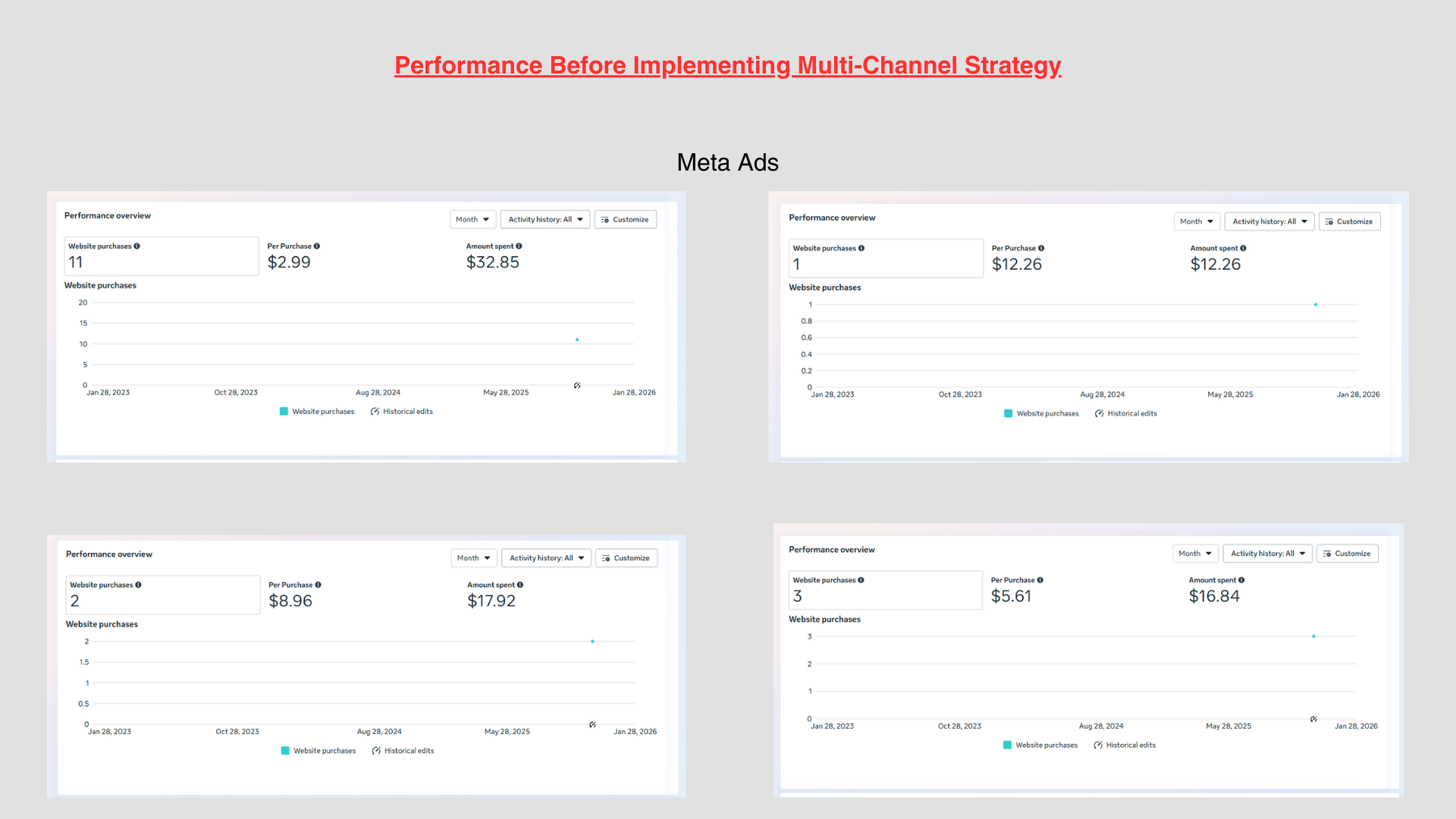
Challenge: Over-reliance on Facebook Ads, high CPR, inconsistent sales
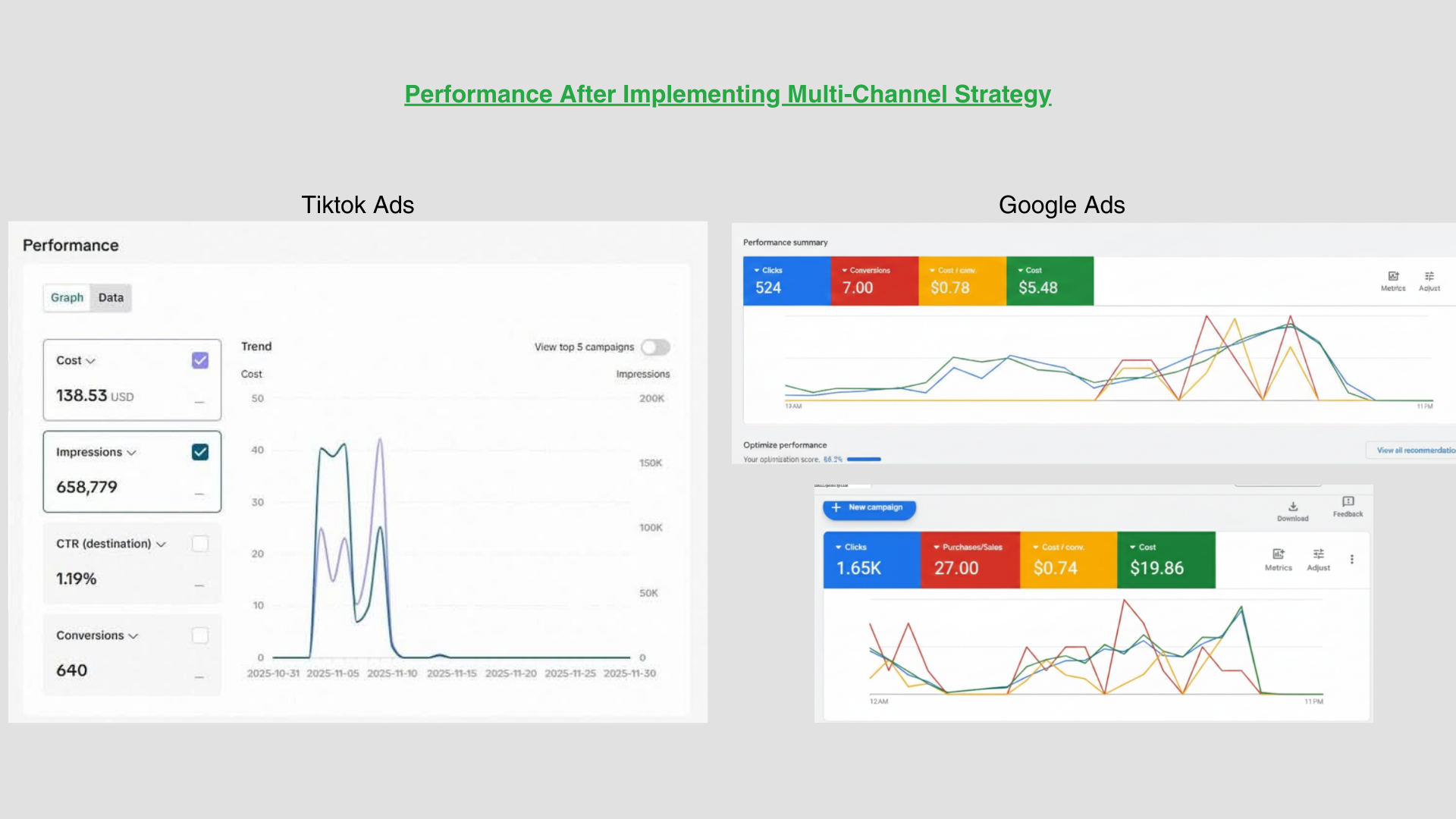
Strategy: Multi-channel paid advertising across Meta, TikTok & Google Ads
Timeline to Results: Within 2 weeks of launch
Key Outcome: Significant sales growth, lower CPR, scalable and stable ad system
The Challenge
When this e-commerce client came on board, their entire ad budget was going into one place — Facebook (Meta) Ads. On paper, it seemed manageable. In practice, it was holding the business back.
Here’s what the situation looked like:
• Cost Per Result (CPR) was too high to scale profitably
• Sales were inconsistent — strong one day, flat the next
• Every attempt to increase the budget led to worse performance, not better
• The business had zero safety net if Meta’s algorithm shifted or costs spiked
The core problem wasn’t the ads themselves — it was the single-platform dependency. Without diversification, there was no way to grow sustainably.
The Strategy
The solution was to stop relying on one platform and build a proper multi-channel advertising system. The budget was split strategically across three platforms, each playing a specific role:
• Meta (Facebook & Instagram) Ads — retained as the core channel for retargeting warm audiences and re-engaging past visitors
• TikTok Ads — introduced to tap into a broader, high-intent audience through engaging video-first creatives and reach new potential buyers
• Google Ads — added to capture high-intent search traffic from people actively looking to buy
Each platform served a distinct purpose in the customer journey — Google caught buyers at the bottom of the funnel, TikTok drove awareness and impulse purchases, and Facebook handled retargeting and conversion. Together they worked as one coordinated growth engine rather than three separate campaigns.
The Results
Within just two weeks of launching the multi-channel strategy, the results were clear:
• CPR dropped significantly as ad spend was distributed across platforms with healthier auction dynamics
• Overall sales grew massively, with new customers coming in from TikTok and Google alongside returning buyers from Meta
• Revenue became far more stable and consistent — no more unpredictable swings driven by a single platform
• The business was finally in a position to scale confidently without fear of one algorithm update disrupting everything
Key Takeaway
Depending on a single ad platform is one of the biggest growth bottlenecks an e-commerce business can have. A well-structured multi-channel strategy doesn’t just lower costs — it builds resilience, reaches new audiences, and unlocks the kind of consistent, scalable growth that a single platform simply can’t deliver on its own.